What’s flowing through rivers across the Western United States is more than just water, and CSN researchers are helping explain why that matters.
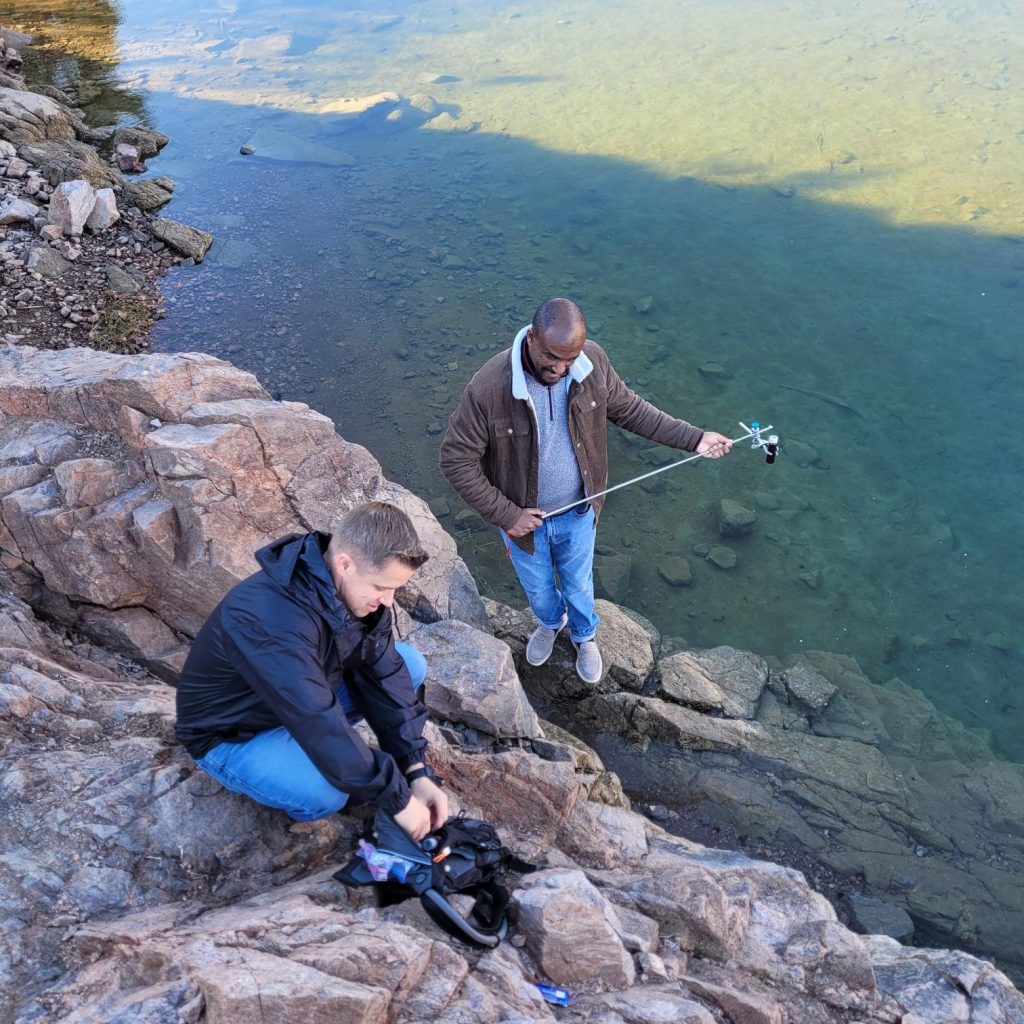
Faculty scientists at CSN recently led one of the most expansive river studies in the region, analyzing samples from 16 major river systems across 10 Western states. Working with researchers from 11 partner institutions, the team examined pharmaceuticals and illicit drugs in surface waters, offering a broad look at how modern life shows up downstream.
“This is a major piece of work and will be a significant contribution to the field, particularly in understanding large-scale contaminant patterns and impacts in surface waters,” said Douglas B. Sims, PhD, Dean of the School of Science, Engineering, and Mathematics.
Researchers detected common medications such as pain relievers, antibiotics, and heart drugs in nearly every river tested, along with traces of illicit substances. These compounds were most often found downstream of wastewater treatment plants and near areas impacted by unsheltered homelessness, pointing to multiple and often overlooked sources of contamination.
The study also showed this is not just an urban issue. Rivers flowing through remote and sparsely populated regions still carried detectable chemical signatures, underscoring how persistent these compounds can be once they enter waterways.
While most compounds posed low immediate risk to algae and invertebrates, some pharmaceuticals showed moderate to high potential risk to fish. Researchers caution that real-world exposure involves complex mixtures of chemicals, meaning long-term ecological impacts may be underestimated.
Beyond the findings, the project highlights CSN’s role in applied, high-impact research. Undergraduate and early-career researchers participated in field sampling, laboratory analysis, and data interpretation, connecting classroom learning to real environmental challenges.
The takeaway is straightforward. Rivers reflect how communities live, manage waste, and care for people, making water quality an issue that starts close to home.